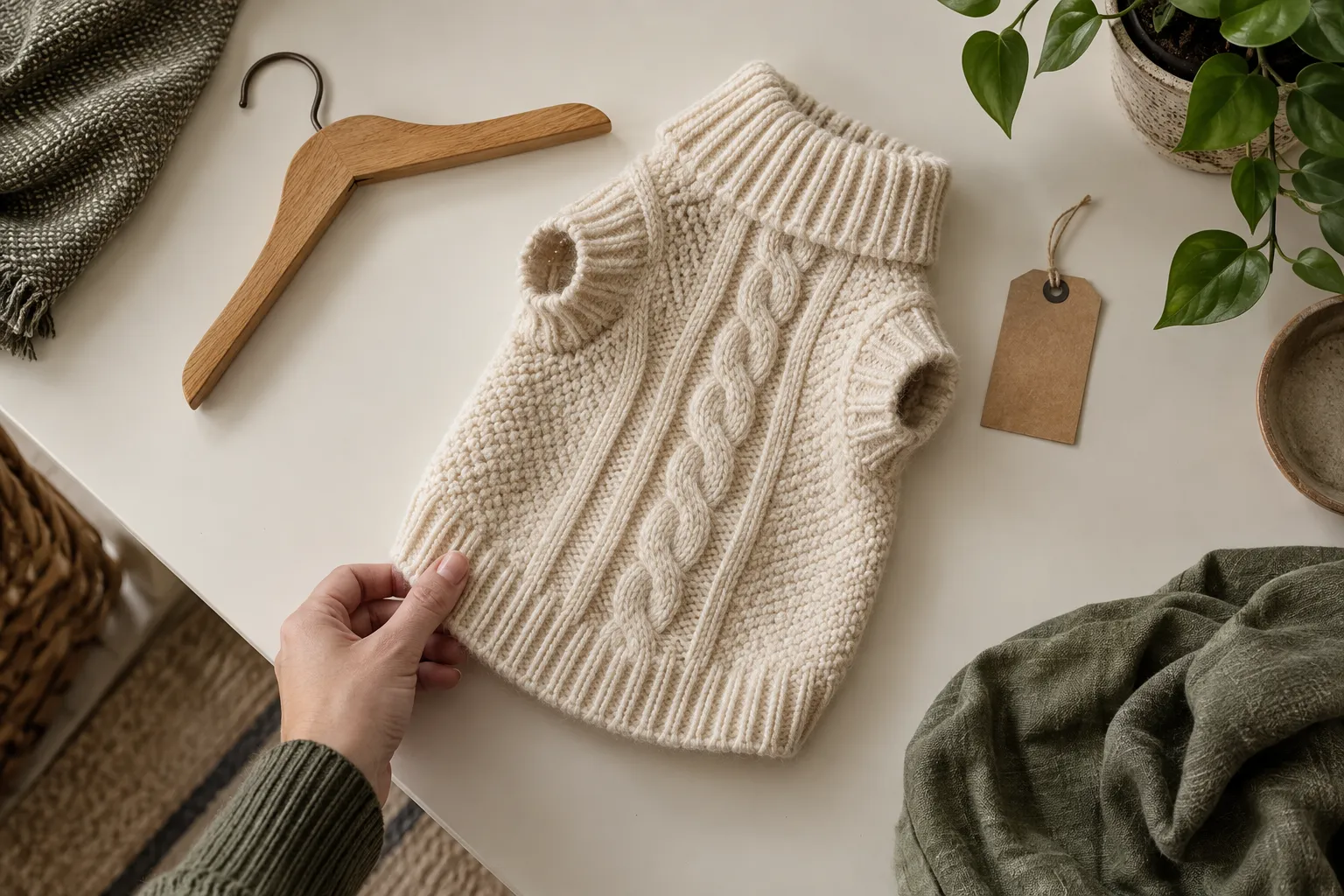
The supplier sends one photo of the sweater. A hand holds the shoulder, a hanger sits inside the neck, and a paper tag covers part of the chest.
You need an on-pet image. The source already asks the generator to decide which shapes belong to the garment.
Before an Amazon seller spends another round reviewing strange results, it is worth sorting the input problem. There are three different cases here, and they do not need the same fix.
| Source condition | What it means | Sensible next move |
|---|---|---|
| Clutter outside the item | The garment is still fully visible | Crop externally if all edges remain intact |
| Object covering a feature | Part of the product is unknown | Rephotograph that feature clearly |
| Ambiguous attached detail | It may be a real component or a removable prop | Confirm with the actual item before editing |
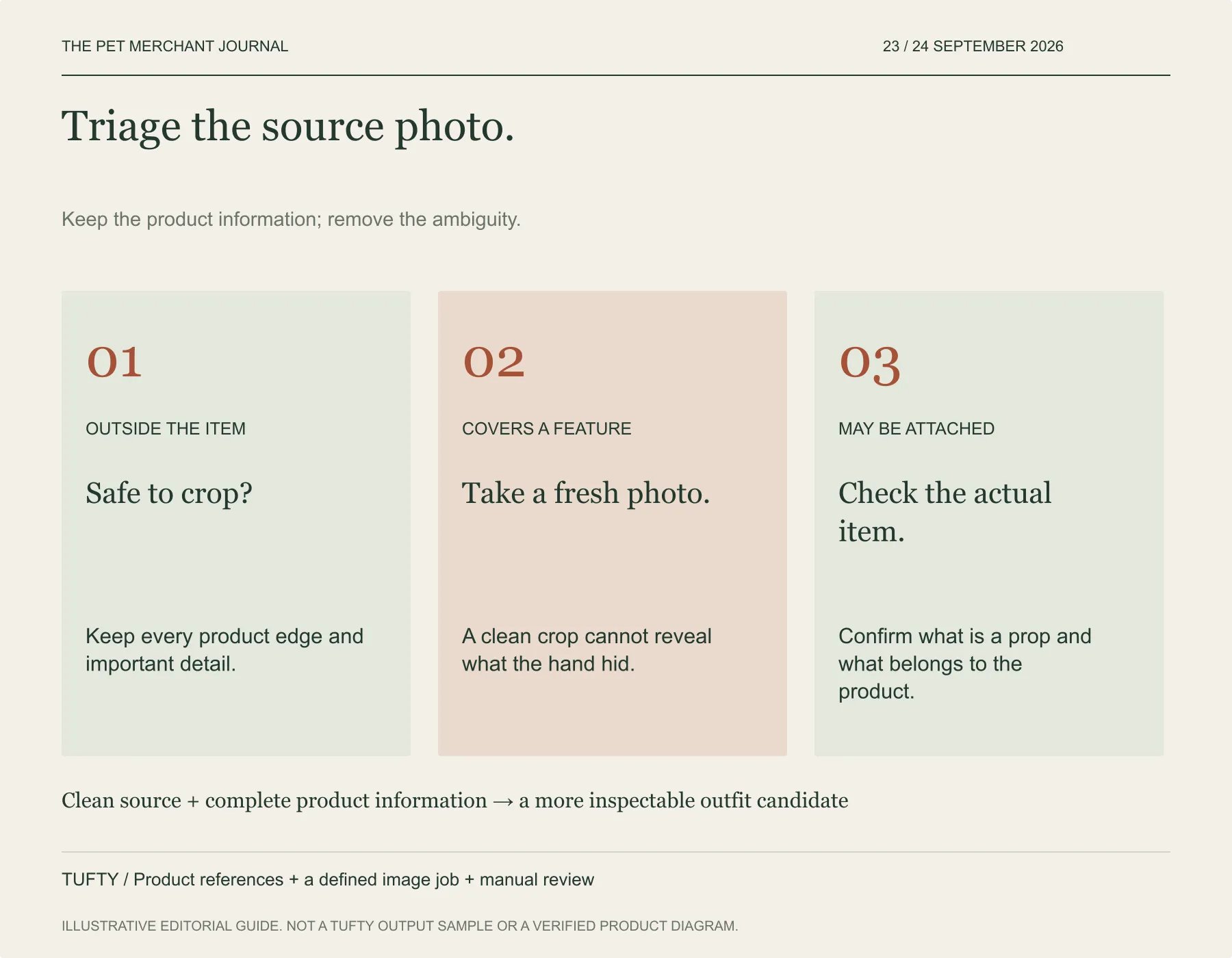
Original editorial framework. Original illustrative workflow. Check the actual item and intended publishing placement.
A crop is not a reconstruction
Removing empty desk space and a distant hanger is straightforward. Removing the only visible neckline because the hanger crosses it is different. You have made the file cleaner while making the product less knowable.
When a hand covers the cuff, take another photograph without the hand over that area. When a tag hides embroidery, move the detachable tag and record the real stitching. Preserve genuine sewn labels or product components unless they are truly being removed from the item sold.
Give the next generation a clearer question
Our tool, Tufty, uses your product photograph and pet reference to generate an outfit candidate. Submit the cleaner, complete garment source and a pet view suited to the intended image. A brief note can clarify that the hanger or temporary styling prop is not part of the product.
The stronger benefit comes from the source itself: the model has visible garment information to work with, and you have something concrete to compare against. This is source preparation, not a promise that Tufty automatically retouches every obstruction away.
Review the candidate for transferred clutter and for the details previously hidden. A cuff invented after you removed the hand is still invented.
For the next supplier photo, make the decision before uploading: usable, safely recroppable, or needs a fresh photograph. The best prompt may begin with a better photograph of the same item.