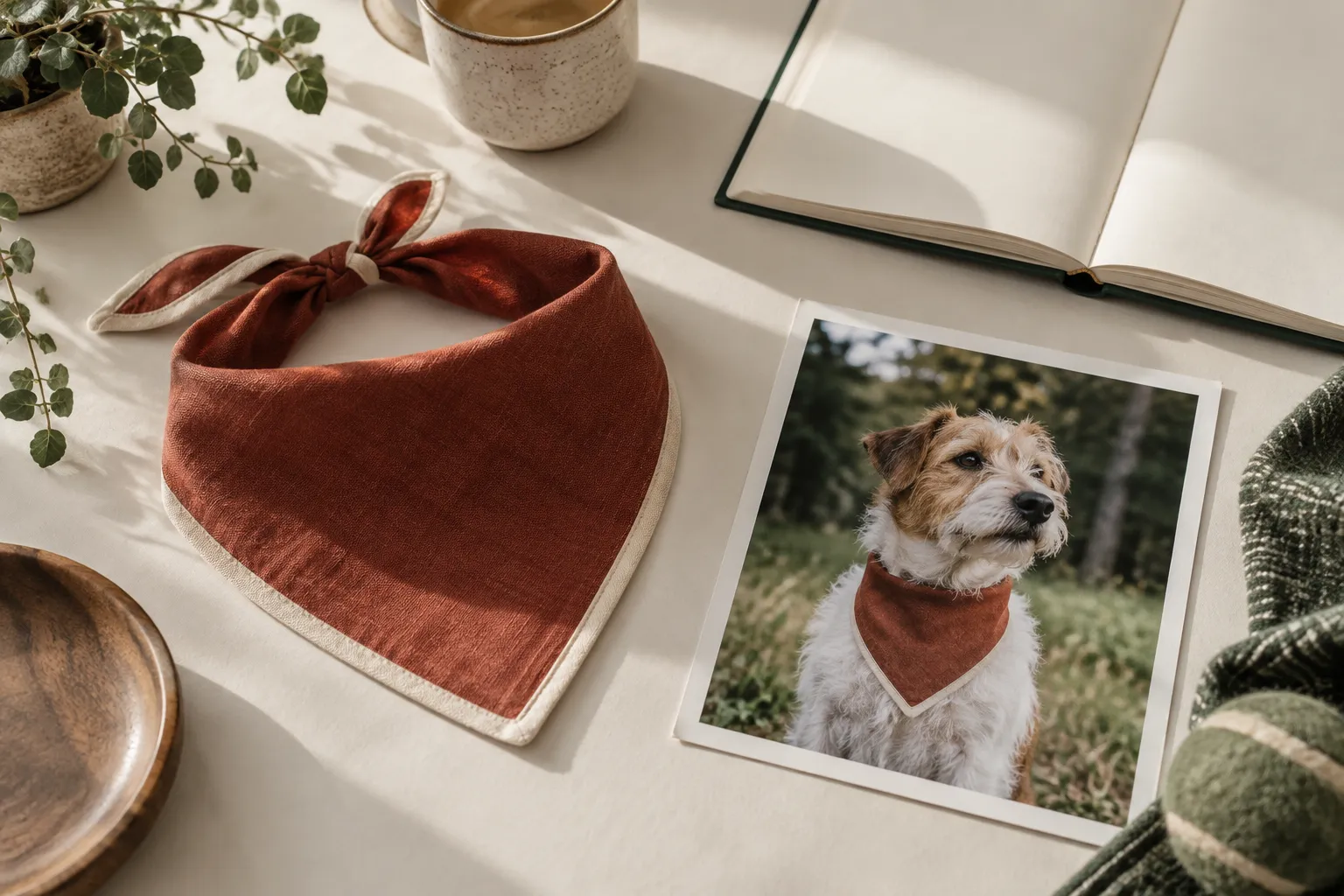
“A terrier wearing a rust bandana, with the triangular front and cream edging visible.”
That sentence is not exciting campaign copy. For a Shopify pet brand preparing a product image, it can be a very good place to start.
It names the item, the presentation and the detail the image needs to communicate. If the finished picture cannot honestly support the sentence, something in the brief or the output needs attention.
Draft the description as if a colleague had to understand the picture without opening it.
Turn the sentence into an image request
Supply the actual bandana photograph and a suitable pet reference to our tool, Tufty. Use the descriptive sentence to guide the additional details: keep the real edging, show the triangular front, and avoid unrelated accessories that compete with it.
Choose a reference where the intended area is visible. The sentence will not expose a bandana point hidden behind a tightly curled pose. It helps you identify that problem before generating another candidate.
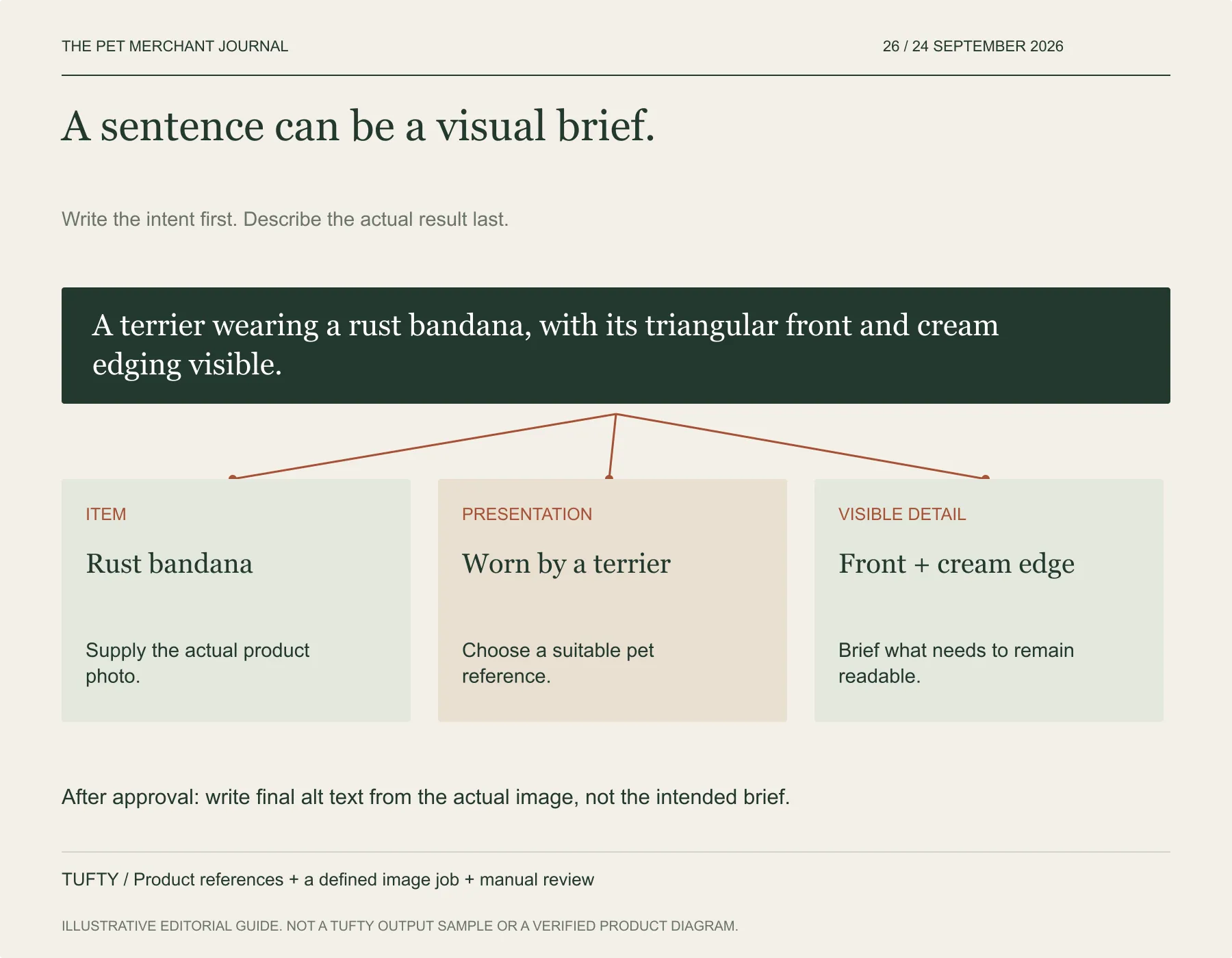
Original editorial framework. Original illustrative workflow. Check the actual item and intended publishing placement.
Now inspect the result. Can you see the front shape? Is the cream edge still part of the actual design? Has a second scarf appeared? A literal description makes these questions easier to answer than “does this look on-brand?”
Describe the result you actually kept
After approval, write the final image description from the image in front of you. Do not copy the intended brief unchanged if the result differs. If a detail is essential and absent, improve or replace the image rather than writing as though the detail is visible.
Shopify supports alt text on product media and recommends brief, descriptive wording. Alt text helps convey image content, including through assistive technology. It has a specific job; it is not a spare field for promotional keywords or unproven benefits.
For an approved synthetic visual, a description might read: “AI illustration of a terrier wearing a rust bandana with cream trim and a visible triangular front.” Use wording appropriate to the actual image and its context. Any visible disclosure needed by the placement is a separate task; alt text alone is not a substitute.
Avoid adding “comfortable,” “waterproof” or “perfect fit” merely because the picture looks convincing. Those claims are not visible evidence.
Take one image request from this week's queue and write its literal description first. When the candidate arrives, read the sentence again. You now have a small, practical test of whether the visual did its job.