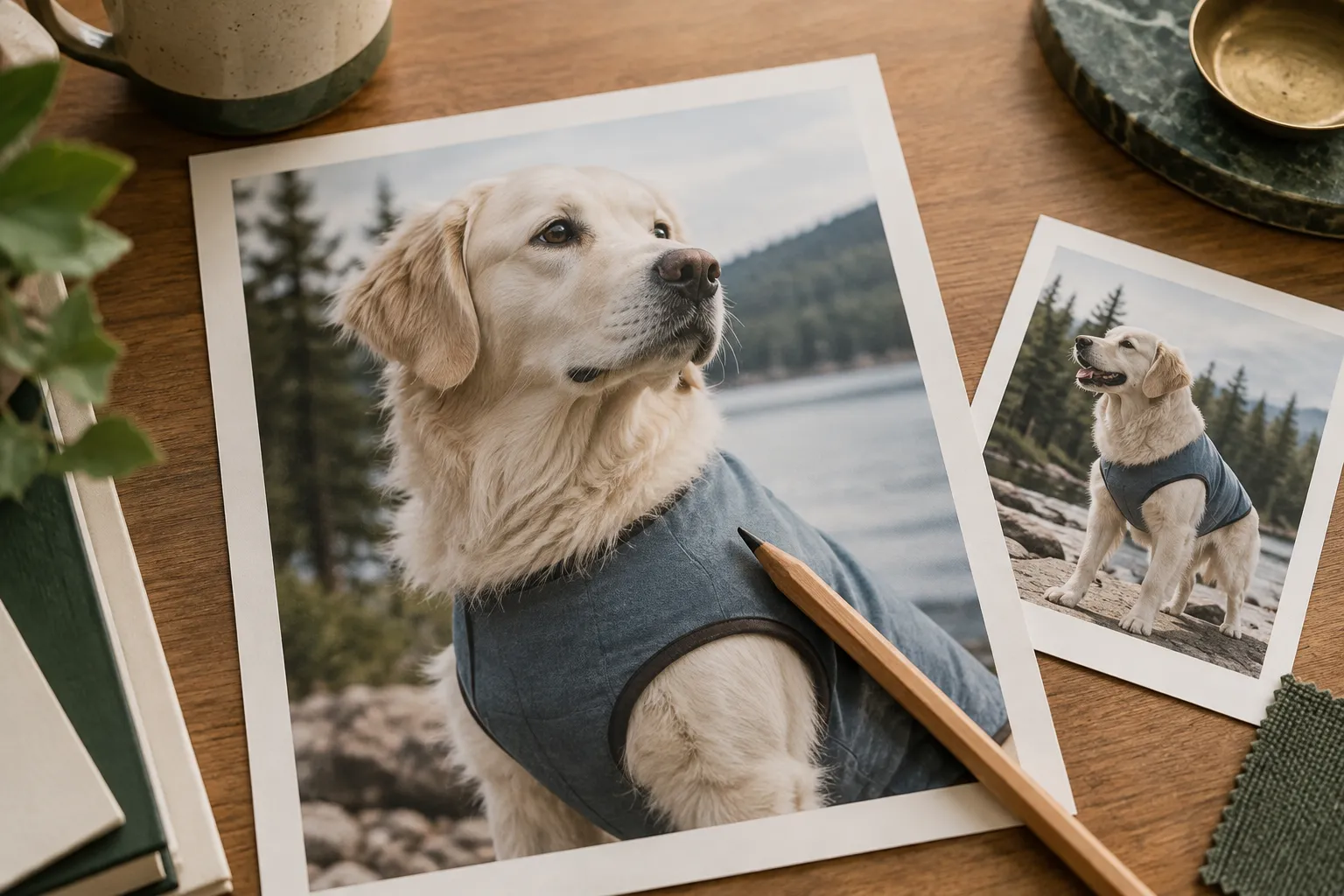
The first version needs to feel more premium. The second feels too polished. The third is closer, but could it be more natural?
Meanwhile, the vest's neckline is still hidden.
For a Shopify pet brand, aesthetic language has a place in creative direction. It becomes expensive when it is the only language used to request a revision. A better note identifies what the next image must visibly change.
Rewrite one piece of feedback
The vague version: “Can we make this look more premium?”
The useful version: “The fur obscures the front neckline. Use a suitable reference where that area is visible. Preserve the actual blue fabric, closure and hem. At product-page size, the neckline should be easy to identify.”
This does not prescribe luxury. It resolves the reason the product looks unfinished in that particular image. Once the garment reads correctly, you can judge the overall presentation on firmer ground.
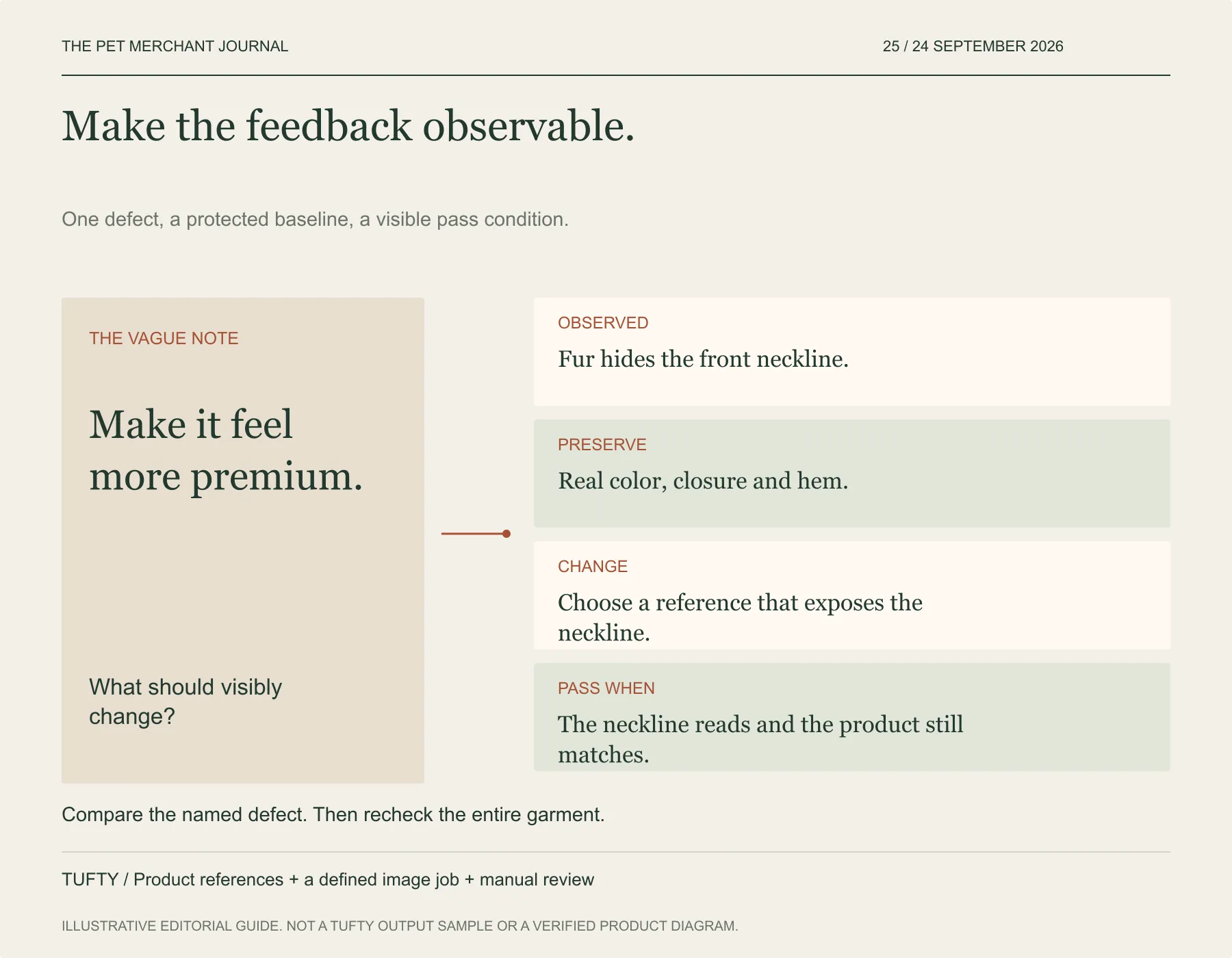
Original editorial framework. Original illustrative workflow. Check the actual item and intended publishing placement.
Keep a baseline for comparison
Our tool, Tufty, lets you combine product and pet references with additional details. Keep the valid source garment, useful pet reference and relevant output settings when you revise the note. If the pet pose itself prevents visibility, replace that reference deliberately and record why.
Save the previous candidate alongside the new one. Ask whether the stated defect changed. Then review the rest of the product again: a clearer neckline is no victory if the new generation changed the closure.
This is a practical comparison, not a controlled experiment. Generative outputs can vary even when you change one instruction, so do not attribute every difference to a single word in the prompt.
Separate preference from error
An invented seam is an accuracy problem. A slightly warmer expression is an aesthetic preference. Keep those comments distinct in your review so the person preparing the next candidate knows what must change and what is optional.
Try a short revision card:
- Observed: the front neckline is obscured.
- Preserve: the actual color, closure and hem.
- Change: the reference or brief needed to make that area readable.
- Pass when: the detail is visible at the intended display size and the product still matches.
You can still choose the most elegant version. The card simply gives elegance an accurate product to work with.
Before the next rerun, replace one adjective in your feedback with an observable sentence. If the reviewer can point to the result, the instruction is ready.